Skip to content

Night fishing on the bank, where you buy hearing instead of seeing

Every piece of equipment on this site that depends on you watching it stops working at nightfall. Night fishing is therefore a different purchase list, and the thing that separates a good item from a bad one is whether it tells you something without being looked at.

After dark, nothing works by eye. That is the whole of this list.

1. The alarm, chosen on its range

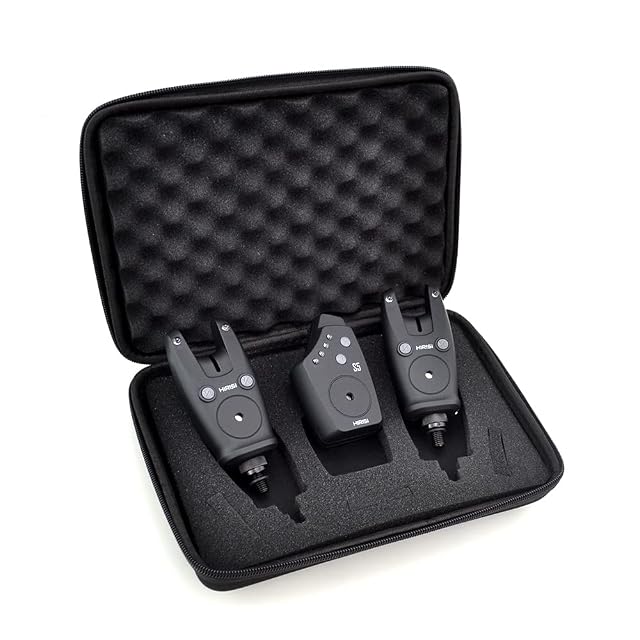
A receiver and two alarms, stated at over 150 metres — the only range published on that shelf, and the figure the whole category exists for.

The receiver vibrates as well as sounding, which is what makes it work in a pocket. The rod rest is a deep U, which is what stops a rod being pulled off the pod on a fast take. And the controls are described exactly: on/off, volume, a short press for tone, three seconds for sensitivity.

What it does not give you: a sensitivity step count, where two alarms on that shelf state eight. And it needs seven AAA cells, none included.

2. The pod

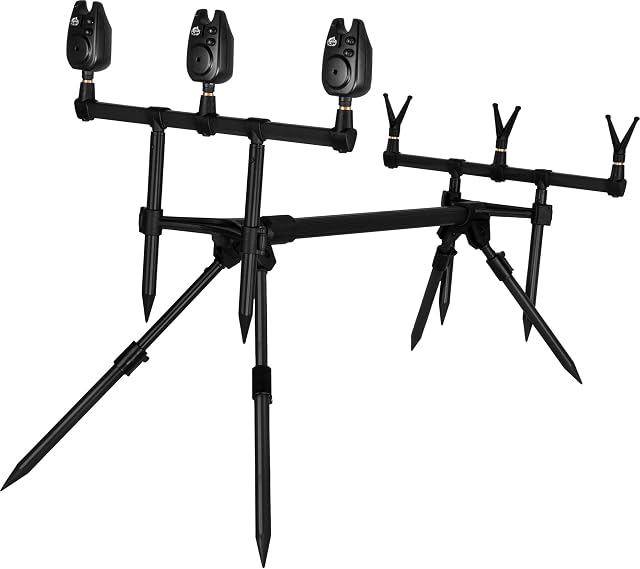
Aluminium, 1943 g, with three alarms and three V rests in the box — and every dimension published: 77 × 44 × 36 cm standard, 110 × 44 × 61 cm at maximum, a 77 × 21 × 7 cm bag, buzzer bars 44 cm wide and 27 cm high adjustable over 18 cm, a centre bar from 77 to 110 cm, and telescopic legs from 24 to 43 cm, each adjusted on its own.

That last detail is the one that matters after dark: legs adjusted individually is how a pod stands level on ground you cannot see. Set it in daylight anyway — a pod levelled in the dark is a pod that tips at three in the morning.

It is also the most completely measured item on its shelf and the lightest, which is the pair of facts that makes a long walk in worth doing.

3. The sonar, used before dark

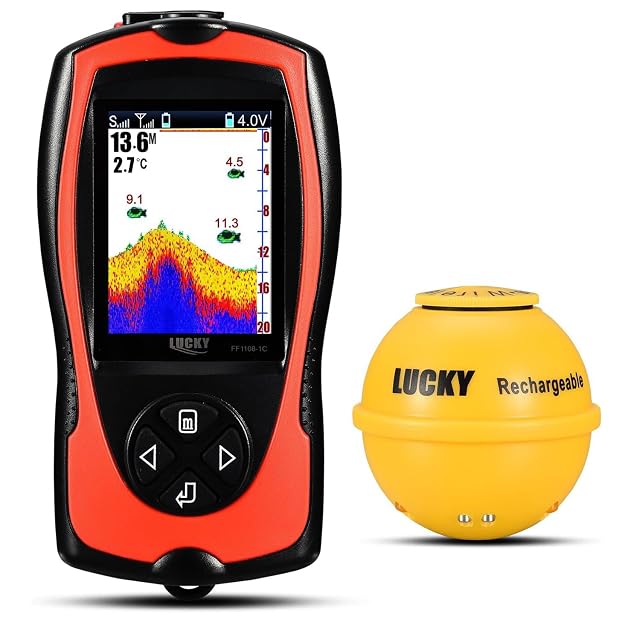
A 2,4-inch colour LCD handset, depth to 45 m, wireless to 150 m, reading bottom contour, depth, water temperature and fish size with depth.

Cast the sensor across the swim in the afternoon and read the bottom: the bar, the drop-off, the silt. At night you then cast to something you have seen.

Two features here are specifically for the dark. The sensor carries a fish-attracting lamp in a transparent cover, with a spare cover, so you can see where it is. And there is a simulation mode that runs every function dry — which means you can learn the menu on the sofa instead of on the bank with a torch in your teeth.

Battery: handset 4 hours, sensor 10.

4. The mat

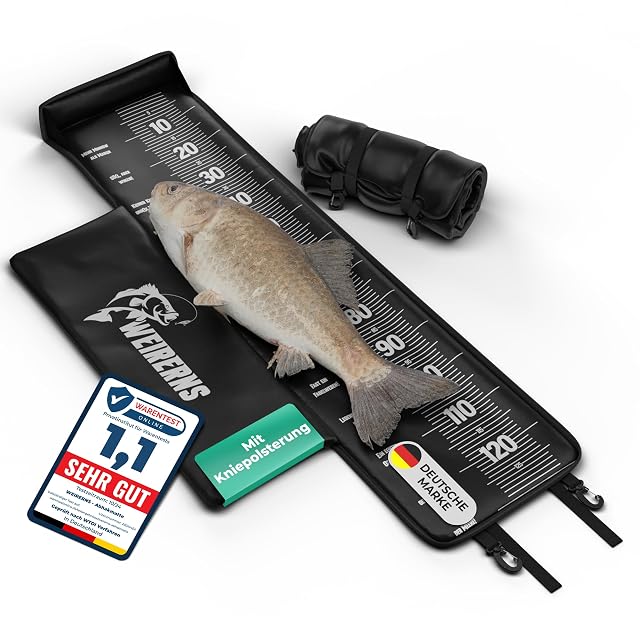
130 × 30 cm in hard-wearing Oxford polyester, with soft knee padding and a non-slip edge guard, rollable with retaining loops and carabiners for a rucksack or a chair.

The edge guard is the night feature: a fish on a flat mat slides sideways off it, and at two in the morning with one hand on a torch you will not catch it. The knee pad is for you, and it is the only thing on that shelf that is.

Three things not sold here

A red-mode head torch — white light kills your night vision for twenty minutes and lights up the swim.

Batteries, for the alarms and the receiver both. Seven of them, for the set above.

And a way of finding your own rigs, bait and tools without the torch. Lay them out before dark in the order you will want them.
The list, and the reason for its order

  1. Hirisi Tackle Smart S5, 1+2 set

    Smart S5 · radio receiver, over 150 metres · deep U-shaped rod rest · on/off, adjustable volume, tone and sensitivity — short press for tone, three-second press for sensitivity · high-power speaker and LED alarm · vibration alarm at the receiver · 2×AAA per alarm, 3×AAA for the receiver, not included · zipped protective case

    Tells you how far the receiver reaches, which nothing else here does.

    Best for: Leaving the rods and sleeping in a bivvy, with the receiver in reach

  2. normani 4061783421754

    Aluminium · 3 bite alarms and 3 V rests included · standard 77 × 44 × 36 cm, maximum 110 × 44 × 61 cm · weight 1943 g · bag 77 × 21 × 7 cm · buzzer bars 44 cm wide, 27 cm high, height-adjustable over 18 cm · centre bar 77 to 110 cm · telescopic legs 24 to 43 cm, each adjusted individually

    The most completely measured item on this shelf, and the lightest.

    Best for: A bank where the ground is uneven and the walk is long

  3. LUCKY FF1108-1CWLA

    2,4-inch TFT colour LCD · depth 45 m · wireless range 150 m · wireless and simulation modes · fish-attracting lamp with a transparent spare cover · sensitivity, brightness, depth range, zoom, depth alarm, fish alarm, fish icon, units and language all adjustable · handset 4 h, sensor 10 h, USB

    The only device here you can learn to use before going near water.

    Best for: Night and ice fishing, where a lit sensor and a dedicated screen beat a phone

  4. WEIRERNS WEI0605

    130 × 30 cm · hard-wearing Oxford polyester, easy to clean · soft knee padding · non-slip edge guard, stated to hold the fish securely · rollable with retaining loops · carabiners for a rucksack or a fishing chair · printed with humorous captions

    Names its fabric, pads the knees and guards the edge — three things most of this shelf skips.

    Best for: A mobile angler who kneels on gravel and wants the mat to clip to the bag

What this guide leaves open

What makes a radio alarm worth the money?

The range, and whether it is published. The whole point of a receiver is not being next to the rod, and 150 metres is the difference between a bivvy at the swim and the car park at the top of the field. It is the only range stated on that shelf.

Why does a control need to be described?

Because on a unit with no screen, a control you cannot find in the dark is not a control. The alarm here spells the behaviour out: a short press cycles the tone, three seconds enters sensitivity. That sentence is worth more at two in the morning than a feature list.

Do I need a sonar at night?

Not to catch, but to know where you are casting. Read the swim before dark and you are then casting to a feature you have seen. The handset here also carries a lamp in a transparent cover so you can find the sensor itself once it is dark.

Anything not on this list?

A head torch with a red mode, and batteries. The alarm set here needs seven AAA cells — two in each alarm and three in the receiver — and none of them are included. That is a night ended before it starts.

Why each one, and for whom

Hirisi Tackle Smart S5, 1+2 set

For : Leaving the rods and sleeping in a bivvy, with the receiver in reach

Main strength : States the receiver range — over 150 metres — which no other alarm on this shelf does

Main limitation : Batteries excluded — seven AAA cells before it works

Read the full review →

normani 4061783421754

For : A bank where the ground is uneven and the walk is long

Main strength : Thirteen separate dimensions published, more than anything else on this shelf

Main limitation : Priced only in Germany at 89,95 €, and absent from the American store

Read the full review →

LUCKY FF1108-1CWLA

For : Night and ice fishing, where a lit sensor and a dedicated screen beat a phone

Main strength : A simulation mode, so every function can be learned indoors before the first cast

Main limitation : The handset lasts 4 hours and the sensor 10 — the shorter figure is the session

Read the full review →

WEIRERNS WEI0605

For : A mobile angler who kneels on gravel and wants the mat to clip to the bag

Main strength : Names the fabric as Oxford polyester rather than « polyester » or nothing at all

Main limitation : No thickness and no load rating published

Read the full review →

Useful comparisons

Head-to-heads already published between two models from this guide or this aisle.

How this guide is built

The models here come from the catalogue of this site. Specifications are those published by the manufacturer and on the Amazon product page; prices are what Keepa reported on the date below, and both move. The ranking uses declared specifications, the balance of stated strengths and limitations, and price. No product on this site has been physically tested, and nothing here claims otherwise.

Last checked on

The figure beside a product asked the shop for itself the moment this page opened; a figure inside the text has sat still since the sentence was written, and the first of the two is the one to trust.

The tool we use ourselves

Reference settled? The figure beside it still has to be worth something.

Tackle gets bought the week before the trip, which is the worst possible moment to judge a price: demand on these shelves climbs from March and falls away after September, so a figure struck through in June says nothing whatever about what the same reference cost in December. UniverTrack keeps a week-by-week history for each retailer, so a reduction can be held against a figure somebody actually paid rather than one written for the banner — and it says when the moment to order has genuinely come.

Real price historyBuy-now alertsAI buying assistant
Try free for 14 days →
No commitment · Cancel in one click · 5 languages