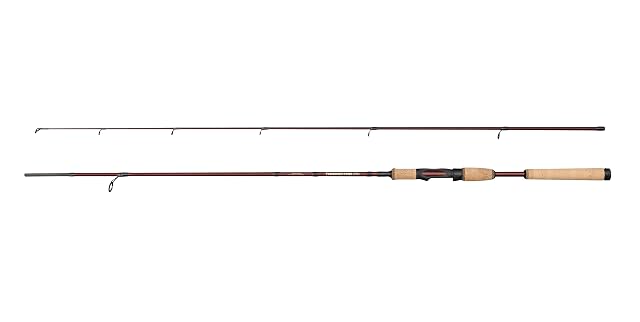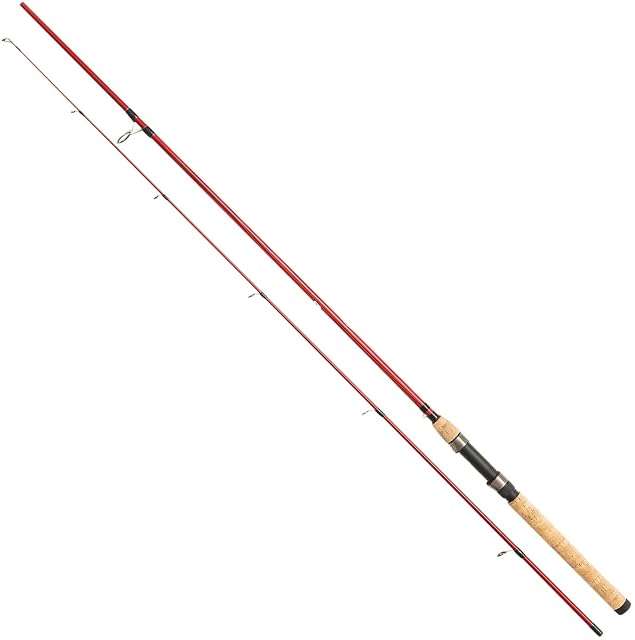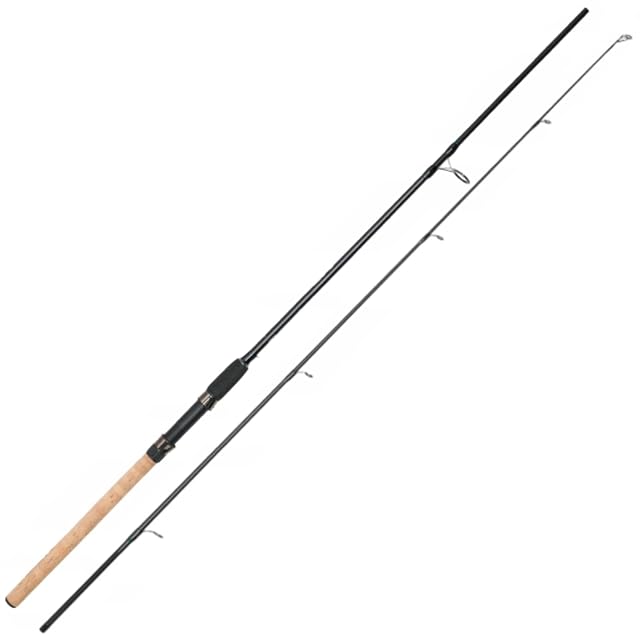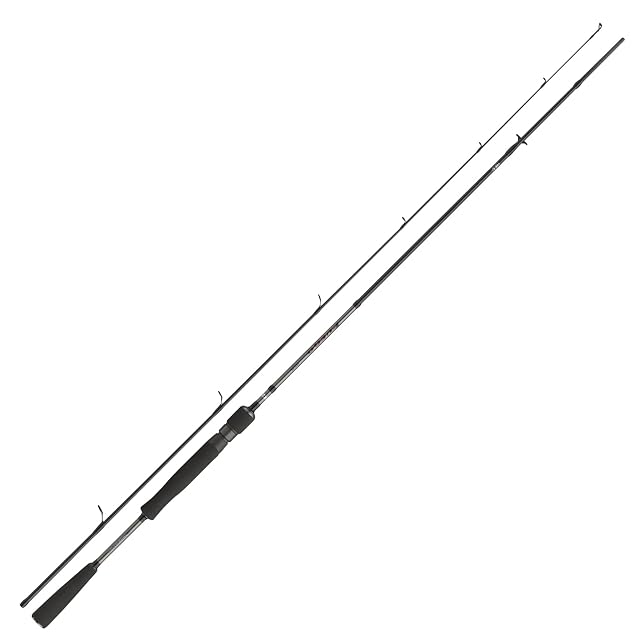
Mitchell 1558843
2,10 m, 8–25 g, 2 pieces, glass composite, stainless guides, EVA grips
A glass composite blank at twenty euros, sold plainly as a beginner and junior rod.
Best for: A first lure rod, or a rod that will be treated roughly
Casting weight first, length second
A spinning rod is bought on casting weight, and everything else follows. The corpus prints it in every title — 2–7 g, 3–12 g, 3–14 g, 5–20 g, 20–50 g, 60–90 g — and it is not a preference: a rod fed a lure lighter than its range cannot load, and a rod fed a heavier one bends where it was not built to. The length comes next, and the shelf runs from 1,70 m to 2,30 m for freshwater predator work, because a short rod is accurate under trees and a long one carries a lure further across open water. The blank is the third figure and the one the listings dress up: « Hochmodul-Carbon », « 24T Carbon », « Glasverbund » — carbon is lighter and transmits more, glass composite survives more, and 24T describes the fibre and not the rod. Two figures the titles give away for free are worth reading. The number of sections — 2 Teile on most, four on the Abu Garcia Tormentor2 travel version at 58,99 € — decides whether the rod fits a car or a suitcase. And a rod sold with a reel is a different purchase: the Paradox Fishing Firetiger at 69,99 € arrives with a 2000-size reel, the DAM Fire Wave XP at 64,99 € as a combo, while the DAIWA Fuego Predator Spin at 46,98 € is a bare rod. The shelf starts at 19,99 € with the Mitchell Adventure 2 and reaches 69,99 €, which is a narrow spread for seven very different tools. We compare casting weight, length, sections, blank material, handle material, guides, weight and whether a reel is included.
2,10 m, 8–25 g, 2 pieces, glass composite, stainless guides, EVA grips
A glass composite blank at twenty euros, sold plainly as a beginner and junior rod.
Best for: A first lure rod, or a rod that will be treated roughly
1,83 m, 3–14 g, 24T carbon, LTS SIC stainless rings, cork handle
A short 3–14 g rod with named rings and a cork grip, stated for both fresh and salt water.
Best for: Close-quarters lure fishing under trees, and light shore work in salt
1,70 m, 2–7 g, stainless rings, cork handle, medium action
The lightest band on the shelf, for trout spoons and micro lures a heavier rod cannot load.
Best for: Trout spoons and micro lures between 2 and 7 g on small water
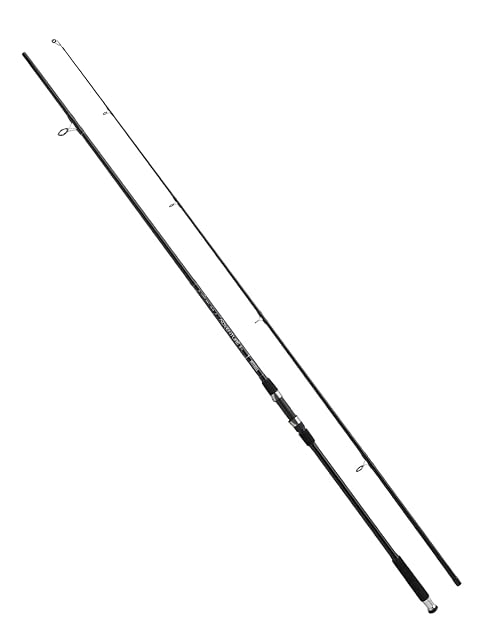
2,30 m, 60–90 g, plug-in blank, cork handle, aluminium oxide rings
The only rod here rated past 25 g, for heavy lures and static baits rather than light spinning.
Best for: Heavy lures, static baits and a general-purpose rod where one rod has to do several jobs
2,00 m, 3–12 g, 2 pieces, 110 g, 8 rings, fast action
Four published figures where the rest of the shelf gives one — weight, rings and transport length included.
Best for: Lure fishing for perch and zander with lures between 3 and 12 g
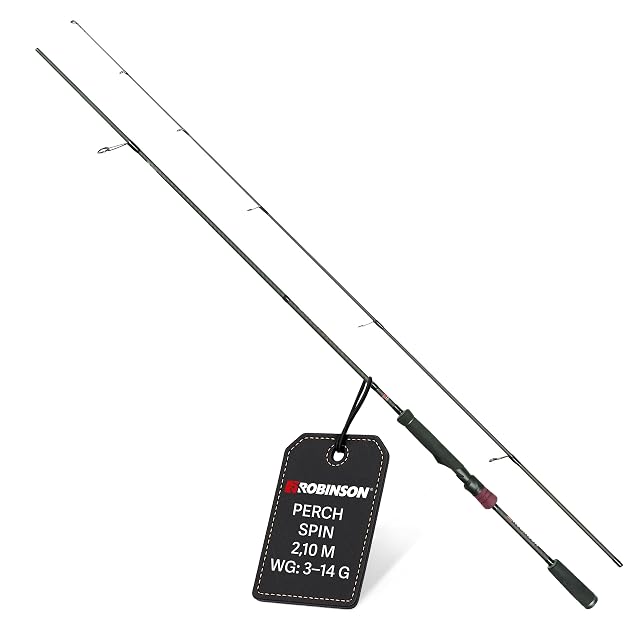
2,10 m, 3–14 g, 2 pieces, IM6 carbon with X-Cross, 8 slim rings, split EVA grip
A named carbon grade and a named ring type at thirty euros, with no weight published anywhere.
Best for: A first carbon lure rod for perch and trout at 3 to 14 g
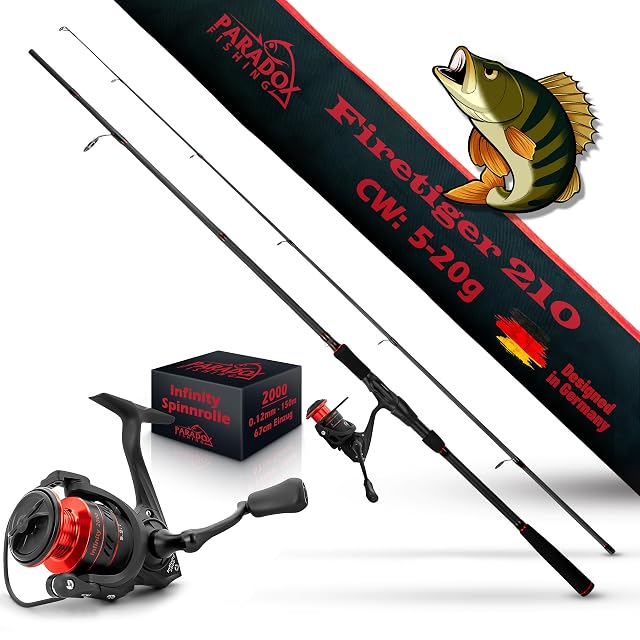
Combo: 2,1 m rod, 5–20 g, 110 cm packed, with Infinity 2000 reel — 0,12 mm / 150 m
A rod and a reel with the reel’s line capacity published, which is rare on a combo.
Best for: A first perch outfit, bought as one purchase rather than two
The figure beside a product asked the shop for itself the moment this page opened; a figure inside the text has sat still since the sentence was written, and the first of the two is the one to trust.