Handling
Handling pike, without hurting either of you
Everything in pike fishing that goes wrong, goes wrong in the ninety seconds between the net and the water. This list is not about catching them. It is about the part afterwards, and the equipment that decides whether the fish swims off and your hands are intact.
By Jean-Benoit Buisson
This list is about the ninety seconds after the net.
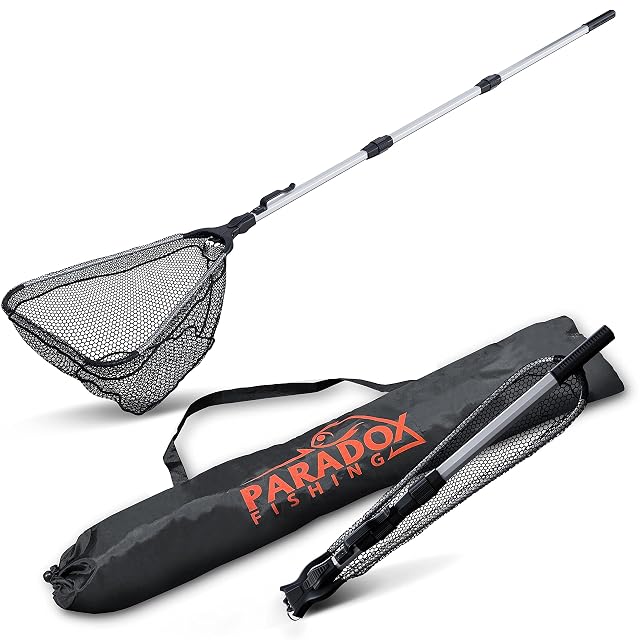
1. The long net
2,10 m — the longest on its shelf, where the shortest is 67 cm. That is the whole argument: on a high bank, a platform or a boat, a short net means leaning out over the water with a green fish on a short line.
The mesh is rubberised, so a treble does not thread into it, and a transport bag comes with it — which is what keeps a wet net out of the car rather than in it.
Net dimensions and load capacity: not published. Read that as a limit on what you can check, not as a figure.
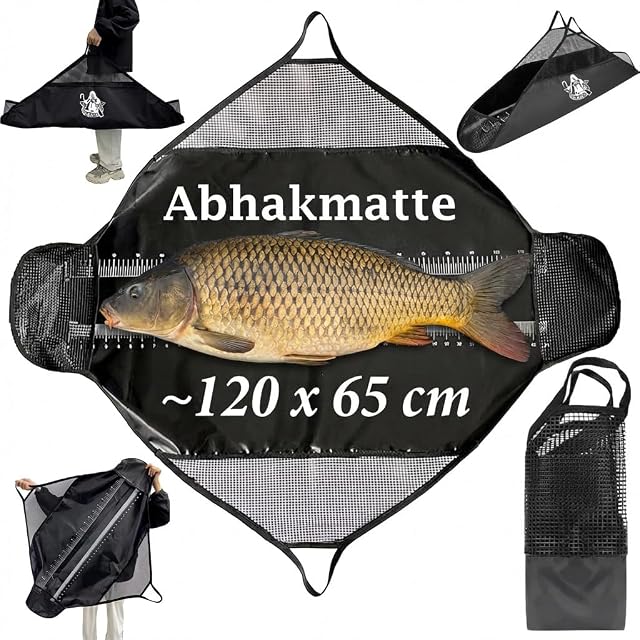
2. The wide mat
120 × 65 cm, rated to 70 kg, with rubberised mesh panels and handles that also take a scale. A pike overhanging a 30 cm mat is a pike hitting gravel every time it moves.
Wet it first. The listing says so, and the reason is the mucus layer — the coating a fish depends on against infection, and the thing a dry surface takes straight off.
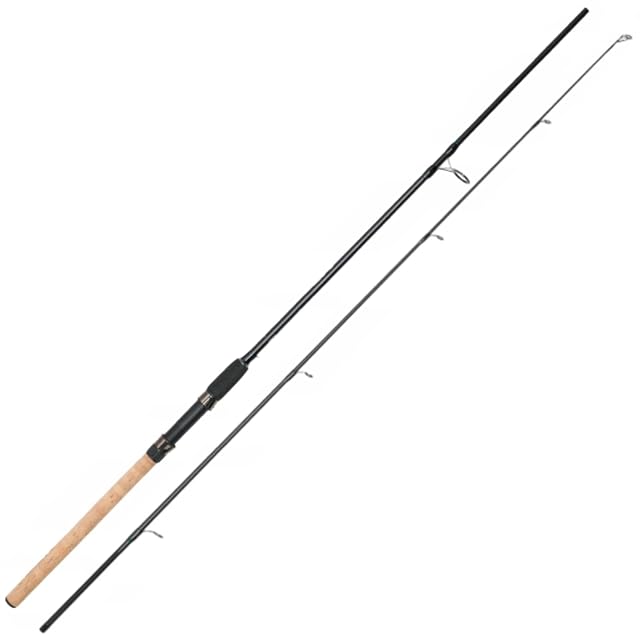
3. The rod
2,30 m, rated 60–90 g — the only rod on that shelf rated past 25 g. A plug-in blank, a cork handle, aluminium oxide rings.
That rating is not a light-spinning rod and does not pretend to be: it is for big swimbaits and static deadbaits, the two pike methods a 3–12 g rod cannot throw.
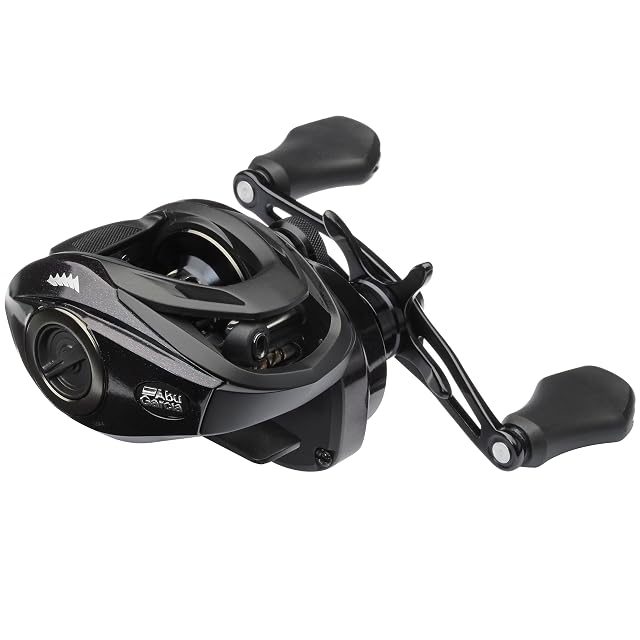
4. The reel
Low profile, 7,1:1, 9+1 stainless bearings, an X-Craftic aluminium frame, a MagTrax magnetic brake and a Carbon Matrix drag.
Frame, brake and drag all have designations, which on this shelf is unusual — everything here can be looked up rather than taken on trust. On a baitcaster the brake is what stops an overrun with a heavy lure, and that is the part worth having a name for.
Check the hand before ordering: it is left hand, and a baitcaster cannot be converted.
The two things not in this list
Long pliers and a wire trace. Both are on this site, both are accessories rather than reviews, and both are what actually get the hook out.
Read the plier shelf before your first pike. The difference between an 18 cm plier and a 28 cm one is the distance between your knuckles and a set of backward-facing teeth.