Berkley 1531524
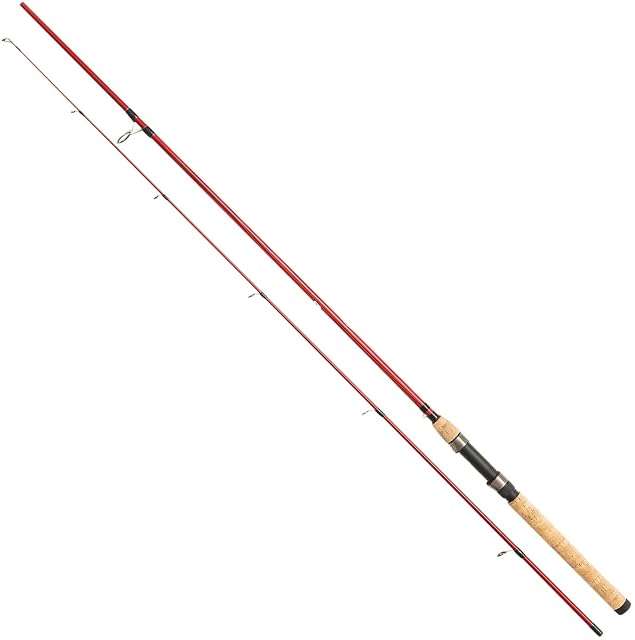
1,70 m, 2–7 g, stainless rings, cork handle, medium action
The lightest band on the shelf, for trout spoons and micro lures a heavier rod cannot load.
Best for: Trout spoons and micro lures between 2 and 7 g on small water
Getting started
Perch fishing is the cheapest way into lure fishing and the easiest to get wrong, because almost every general spinning rod on sale is too heavy for the lures that catch perch. This list is built around the casting weight printed on the blank, and everything else follows from it.
One number decides this whole list: the casting weight printed on the rod.
The lightest band on its shelf, and the reason to own it is that nothing heavier will cast a trout spoon or a two-inch soft plastic at all.
A rod rated 8–25 g with a 3 g lure on it does not bend, does not load, and does not cast. This is not a refinement — it is the difference between fishing and flailing.
Stainless rings, a cork handle, a medium action.
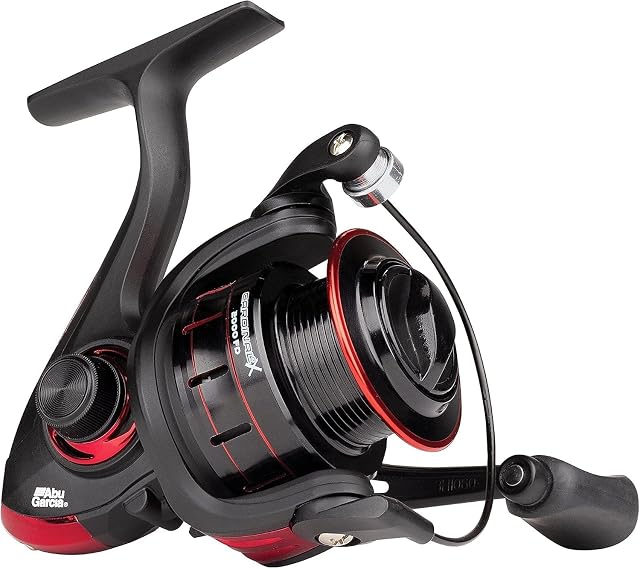
Size 1000, 240 g, 4 kg drag, 5,2:1, four bearings, 120 m of 0,20 mm, 72 cm per turn, aluminium spool.
Every figure a reel is bought on. And the size is the point as much as the specification: a 1000 on a light rod balances, and a 4000 on the same rod turns it into a club.
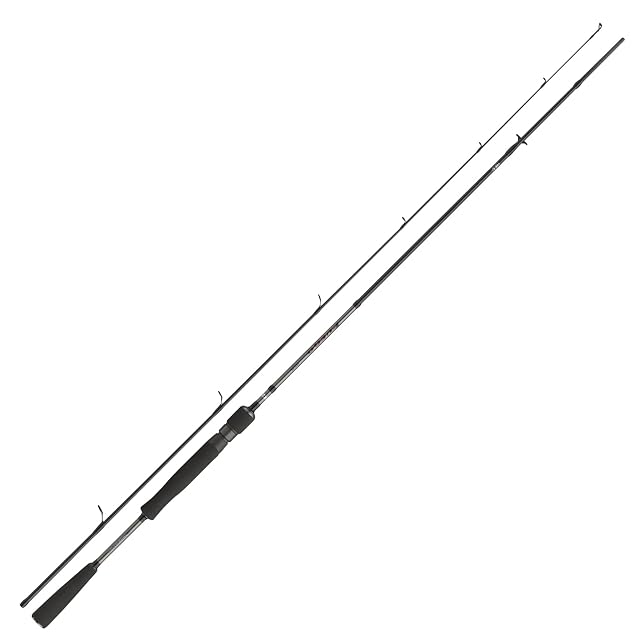
Two pieces, 110 g, eight rings, fast action — four published figures where the rest of that shelf gives one.
This is the rod that covers perch on jig heads, small zander and a surprise pike, and if you only buy one rod it should be this one.
67 to 90 cm, round frame, one-button folding, soft PVC-coated nylon mesh, and a sturdy clip plus an elastic cord with a carabiner.
The coated mesh matters twice: hooks do not thread into it, and it does less damage to a fish going back. The cord matters once, from a boat or a steep bank, and that once is enough.
Nothing in this list is a lure, and that is deliberate — lures are lost and replaced. What is worth reading before buying any is the jig-head shelf on this site, where one set is tungsten at 0,3, 0,7 and 1,2 g for fish that will not move for anything, and another publishes six weights from 1 g to 10 g with the weight and the hook size marked on every head.
1,70 m, 2–7 g, stainless rings, cork handle, medium action
The lightest band on the shelf, for trout spoons and micro lures a heavier rod cannot load.
Best for: Trout spoons and micro lures between 2 and 7 g on small water
Size 1000, 240 g, 4 kg drag, 5,2:1, 4 bearings, 120 m / 0,20 mm, 72 cm per turn, aluminium spool
A properly specified 1000 for light lure work, with an aluminium spool and crank.
Best for: Light lure rods at 2–14 g, on a trout stream or for perch
2,00 m, 3–12 g, 2 pieces, 110 g, 8 rings, fast action
Four published figures where the rest of the shelf gives one — weight, rings and transport length included.
Best for: Lure fishing for perch and zander with lures between 3 and 12 g
Because a rod loads by bending, and a 3 g lure will not bend a rod rated to 25 g. The cast goes nowhere, you feel nothing on the retrieve, and the lure never swims properly. It is the single most common mistake in a first lure purchase.
They are two bands, not two versions. One is 1,70 m rated 2–7 g for trout spoons and micro lures; the other is 2,00 m rated 3–12 g for perch and zander on soft plastics. If you buy one, buy the second — the 2–7 g rod is a specialist and the other covers more days.
Not in this list, because lures are consumables. On this site the soft-lure shelf runs from 6 cm bodies to 12 cm, the jig-head shelf goes down to 0,3 g in tungsten, and the trout spoons start at 2,5 g. Match the head weight to the rod, not to the fish.
Because you will hook something bigger. A perch water holds pike, and a 2–7 g rod with no net beside it is how a good fish is lost. The one here is short, folds at one button and comes with a clip and a corded carabiner so it does not go in the water with the fish.
For : Trout spoons and micro lures between 2 and 7 g on small water
Main strength : The only rod here that will load a 2,5 g trout spoon, which is the lightest weight on the lure shelves
Main limitation : Four lines of specification, and none of them a figure beyond the length and the casting weight
For : Light lure rods at 2–14 g, on a trout stream or for perch
Main strength : Publishes six figures on a reel at 25,99 €, which is unusual at that price
Main limitation : 4 kg of drag is the lowest on this shelf, which suits the size and limits the use
For : Lure fishing for perch and zander with lures between 3 and 12 g
Main strength : Publishes its weight — 110 g — which no other rod on this shelf does
Main limitation : Nothing is said about the handle material, which two rods here name
The models here come from the catalogue of this site. Specifications are those published by the manufacturer and on the Amazon product page; prices are what Keepa reported on the date below, and both move. The ranking uses declared specifications, the balance of stated strengths and limitations, and price. No product on this site has been physically tested, and nothing here claims otherwise.
Last checked on
The figure beside a product asked the shop for itself the moment this page opened; a figure inside the text has sat still since the sentence was written, and the first of the two is the one to trust.
Tackle gets bought the week before the trip, which is the worst possible moment to judge a price: demand on these shelves climbs from March and falls away after September, so a figure struck through in June says nothing whatever about what the same reference cost in December. UniverTrack keeps a week-by-week history for each retailer, so a reduction can be held against a figure somebody actually paid rather than one written for the banner — and it says when the moment to order has genuinely come.